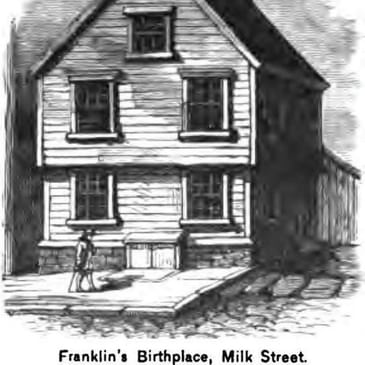
Now this is the FCB podcast network. The breed us all with cheer any firs day of. The thing, and they thought so we working with America and. Of the. Welcome back to the Growing Patriot podcast American History for Kids. I'm your host, Amelia Hamilton. This is the first episode of our series on our Founding Fathers. Today we're going to be talking about Benjamin Franklin, our oldest and first founding father, and we're going to be talking about his childhood, his life, and what he was like as a person. So first we have. Some questions from l and then some answers from our expert Colin Brown. Hi. My name is Elle. I am thirteen years old and I live in the Los Angeles area. Some of my favorite things to do are reading, swimming, and doing crafts. I have a few questions about Benny Franklin. What was his life like when he was my age? Did he ever have a wife in shortan of his own? Does he have any descendants who are alive today thanks to me? Probably the best way to start is kind of just how I got interested in American history, right aside from being an American and loving my own country. I was when I was ten or eleven, so probably around the same age as your listeners. I started reading this I think I was, I think we're sitting in American history or something, and I read this book called George Washington's World. I can't remember the author. She It's an older work, but it kind of gives a narrative telling of the revolution and just and the founding and kind of like what's going on in England, what's going on in Paris at the time. And I fell in love with that, like it just you know, it enchanted me. And ever since then, I've kind of, you know, been a diehard American in a lot of ways. But you know, with Franklin, I didn't really come to like I knew the autobiography, and I knew things most people know, right his inventions, his you know a little bit about his political career, his experiments and such, all his writings. But I really got into Franklin and graduate school and it was kind of studying Franklin's views on the British Empire and kind of how ahead of his ahead of his time he was that really got me interested in him. And so yeah, that's uh, it's been a couple of. Years now, So what are you doing now? Currently? I am a visiting assistant professor at the University of Mississippi with their the Declaration of Independent Center for the Study of American Freedom and well at the same time finishing up the dissertation. So yeah, not yet, doctor, but. So close almost almost all right. So, you know, you talked about, you know, loving American history from childhood, and that's what we are going for here on the podcast. So I would like to start with Benjamin Franklin's childhood. So when he let's start right at the beginning. So when he was born, was there any sign that he was going to be an important man that we would be talking about all these years later. Was he, you know, born into a famous family or anything like that. He wasn't. He actually was. So his parents were Josiah and Abiah Franklin. He was born in Boston in seventeen oh six, and he was one of seventeen children. His father had been previously married and had five kids, and his first wife passed away and then remarried and had ten children total, including Franklin. And Franklin was the youngest boy, so the tenth son and the youngest son. And so you know at his birth, he you know, he's just one one of the litter, so to speak, a bunch of siblings. But you know, from a very early age he kind of demonstrated or revealed a kind of of precocious intellect. And he was very spirited. So I should back up a little bit. So his his father, Josiah, was a candle maker. He made soap and candles. So not particularly a wealthy rising family really, more kind of middle class, lower to middle class. But Franklin, you know, he, like I said, was very smart and very spirited and got himself, as he puts it in his autobiography, into a lot of little scrapes. So one story he gives is he had a tendency to be kind of be a leader among his group of friends. And one day they were playing around a river and decided they were going to build a bridge. And this was Franklin's entire idea, right, He was like, I want to build this bridge over the river or over the creek, really, and so they started taking a bunch of bricks that they found lying around, and you know, all according to Franklin's direction, they built this little bridge. It turns out that those weren't bricks that Franklin could use though someone else was supposed to be using them. So his father rightly chastised him, right corrected him, and taught him that while it's you know, you wanted to build something useful, but the most useful thing is always also going to be honest. So from an early age, Franklin you know, learned better to avoid doing anything you know, no lying, no cheating, no stealing, try to do everything honestly. So he you know, as a as a child and as one of seventeen, he he was only in school formal schooling for about a year or so. He went to a small grammar school when he was about eight years old. He did very well, but his father didn't have enough money to send him through all the way through college, and so decided that Franklin, even though he was doing well and probably of his siblings the most likely to excel at you know, school and everything, he decided Franklin needed to learn a trade. So he first he took him out of the grammar school and then for a year Franklin was enrolled in a kind of preparatory school for shopkeepers and such. He learned penmanship and how to write and mathematics. And then after that, about when he was about the age of ten, Franklin went and worked with his father making candlesticks and soap. And this was kind of the path that his father had set for him. You know, you're gonna study a trade and make your fortune off of that. Franklin didn't like making candlesticks. He didn't like making so he since he lived in Boston, Boston being a port town, he was near the water all the time, and he became really enamored with the idea of being a sailor, of going off onto the high seas and having adventures, and so that's what he wanted to do. And I think he even threatened a couple of times, I'm going to run away and you know, stow away on a ship and you can't stop me. His father, though, discouraged him on that right and said, Okay, if you don't want to be a candlestick maker, then let's find another trade for you. We have to something else, and they eventually settled on printing. Franklin's older brother, James, owned a print shop, a printing business, and eventually a newspaper, and from about the age of twelve until he was seventeen, Franklin was an apprentice with his older brother James, learning printing. Okay, and that actually takes us into Elle's first question that she sent in, which is what was Benjamin Franklin's life when like when he was her age which is thirteen. So you know, it's the eighteenth century, the seventeen hundreds, So you know, young Franklin as a kid, he didn't have a lot of things we have today, right, you know, he had toys and such, but no TV, no internet, no movies, none of those things. But what he did have was he had his imagination and his friends, and he also had books. In his autobiography, he talks about how from a very early age he developed a great appetite for reading, and he kind of devoured books. When he was working for his older brother, he would he would get paid a little bit and he would just save up rather than pay for food. He would go without meals or like eat only one meal a day in order to save up money to buy more books. Because that's what he was really passionate about was reading. And he read a ton of things, right, He read the Bible, He read lots of literature at the time, like John Bunyan's Pilgrim's Progress. Cotton Mather was a contemporary, and he read some of Cotton Mather the Mathers Essays. He also read the Greek, the ancient Greek historian Plutarch, and read a bunch of the lives of these ancient Greek and Roman statesmen and heroes, and plenty of other things like we don't even I don't think we know fully everything he read, but that you know, he spent most of his time reading. When he wasn't reading, he was swimming. He loved to swim as well. He a few years later when he during his first trip to London, he became he got the nickname the water American because he taught a couple of Londoners how to swim, and he even developed a couple of techniques of his own. So mostly, you know, Franklin was reading, he was swimming. So he had a pretty active intellectual life, right, a pretty active active life physical life. And then he also tried his hand at writing. So he and his friends. A lot of his friends were also like him, very smart, and they wanted to become writers, poets and such, and so they had contests writing poetry, and Franklin was was pretty good at it. He had a uncle who wrote a couple of poems. One of them, his uncle, who also was Benjamin Franklin, dedicated a poem to the younger Benjamin Franklin, and it was kind of this connection that led Franklin to, oh, you know, I'm going to imitate my uncle write poetry. Aside from that, though, at the so, starting at the age of twelve, he was working for his brother James, and so most of his time was spent in their print shop setting type in the printers, transcribing essays and other things that they were putting into their newspaper. And mostly it was kind of that. Mostly it was sorry, that was about it. That was mostly it right day to day life for twelve thirteen, fourteen year old Franklin working in the print shop during the days, during meals, reading as much as he could, staying up late reading, sneaking books under the covers and such, and then you know, going outside and playing a lot. But also he had access to some of the smartest and wittiest figures in Boston at the time. A lot of his brother James's friends were kind of amateur writers themselves who wanted to write essays and the newspapers and such. And they were all also very learned, well learned, well read, and so Franklin got to overhear and even participate in some of their conversations, and this led him eventually to his Silence Good, Silence do Good letters that he wrote around fifteen or sixteen years old. So famous letters right under and under the persona of this. How did those come to happen? Yeah? Well, so it's an interesting story, right, so he there are a number of inspirations for it. The name Mather, who whom I mentioned earlier, had a series of essays about doing good, and Franklin kind of took his his persona or his his monik or his name based on that. But Franklin at that age, partly because of his own kind of temperament, partly because of what he was reading at the time, partly because of the broader kind of social sphere of his brother and their friends, Franklin was kind of becoming a little bit of a rebellious teenager in some ways. He may not have had some of the best influences. According to some of his fellow citizens in Boston. So Franklin developed a kind of a taste for being ironic, for making a lot of jokes, puns and such, and also for kind of trying to you know, he he he was smart. He knew he was smart, and he wanted to prove it to everyone, which is, you know, can be a good thing and it can be a bad thing, right. But the Silence Do Good letters were kind of a mix of both. So they were primarily a series of letters kind of making fun making, you know, parroting parts of Boston society. Sometimes they got him into trouble, sometimes they got his brother into trouble, and but but overall they were very witty and very impressive. In his autobiography, Franklin recounts how he decided he was you know, he admired his brother's acquaintances, and he thought, well, I could do this, and so he wrote these letters anonymously. No one knew that he was writing, not his brother or his brother's friends. And what he would do is he would come downstairs or come over to the print shop early in the morning and slide the manuscript under the door, right, so it just appeared there, and then he would during the day he would get to witness his brother and his brother's friends praise him, right, like, oh, isn't this you know, this line so funny? Right, this is a brilliant little joke right here, And all the while Franklin's kind of there in the corner, you know, you can imagine, you know, kind of smiling to himself, right because they don't know he wrote it, but he he knew. He Did they ever find out that it was him? They eventually did, and I think I think some of them started to suspect that if it wasn't they suspected it was one of their own, right, And eventually it kind of discovered it was Franklin. But but yeah, so that was his first major kind of attempt at writing. What was those silence do get letters? Great? And then as he got older, did he stay with printing? Did it work out better than candle making? Yeah? He uh, he came to see a lot of value in printing, and he came to like it as well. It was a really good way to make money. First of all, you know, you didn't just print newspapers. You printed books, You printed pamphlets, and if you were really good, you ended up printing a lot of the official documents for the colonies. So he stuck with printing well until about the seventeen forties and fifties. Around that time he retired. He was still writing, of course, but his profession as a printer kind of he let others, his partners kind of focus on that. But yeah, so he was stuck with his brother until about seventeen seventeen, twenty two, twenty three, so around the age of seventeen, so he was working with his brother for about four or five years. And around this time he started to make a unpleasant reputation for himself. He got himself into trouble and his brother was also getting him not his brother James also got into trouble at the same time. Franklin, being a rebellious teen, started to dislike how his brother was treating him, bossing him around and such, and eventually Franklin decided, you know what, I'm just gonna leave. So he runs away, leaves Boston, ends up in Philadelphia, and in his biography autobiography, he he explains he's kind of mixed about it. He does think it was irregrettable how he acted towards his brother, but at the same time he you know, his brother kind of beat him from time to time tough love ya, and so Franklin decided he was going to you know, make it out on its own. But when he was in Philadelphia, he decided to pursue the printing business. He worked with a local printer there before eventually purchasing his own or starting up at his own shop and starting the pencil his newspaper at the Pennsylvania Gazette. Okay, so then how did that transition happen where he became a politician or became interested in politics. Well, so Franklin was interested in politics as a child, so probably around the same age as you're, maybe not the exact same age, but twelve thirteen fourteen, his Silence Do Good letters talked about politics a little bit, so he was he was definitely interested in politics from his teenage years, and he filled his newspaper with a lot of reports on what was going on elsewhere in the colonies, what was going on back in England, and also a number of essays of his own kind of supporting certain political policies that were being debated at the time. But Franklin didn't really kind of come into his own until about the late seventeen forties. Up until that point, he was pretty well known as a merchant, as a printer, a newspaperman. He eventually, around a few years before this, became postmaster for Philadelphia. But in seventeen forty seven he really made a name for himself by trying to establish a voluntary militia for Philadelphia or for Pennsylvania. So Pennsylvania was one of the only colonies that didn't have a military body to defend itself. Every other colony had a militia or small kind of military force that they could that could come out depending on the occasion. Pennsylvania didn't have that, primarily because most Pennsylvanians were Quakers, and the majority of Quakers were pacifists. They believed that to be a good Christian meant not committing any acts of violence towards one another. But not everyone in Pennsylvania was a Quaker, and Franklin was not a Quaker. And around seventeen forty five you had a war breakout between England and France, and within a few years you started seeing French ships up the Delaware River towards Philadelphia, and that got a lot of people really concerned very alarmed, right, because what are we going to do? So Franklin is you know, Franklin watches the colonial Pennsylvania government kind of do nothing. They the Assembly, being made up of Quakers, said we you know, we pray that nothing happens, but we can't do anything. And the governor there wasn't a governor in Pennsylvania at the time. The previous governor had left and the next governor was on his way, so they didn't really have anyone who was officially governor. They had someone who could act as governor, but even he didn't really have any powers to create a legal militia force for defense. And if I'm into too much detail, look no, no, it's great. So Franklin, watching all of this and getting concerned about, you know, what are we going to do to defend ourselves, decides, you know what, I'm just going to form a militia myself in the you know. In the years before this, Franklin had kind of made a reputation for a lot of his civic projects. It's the seventeen thirties. He started one of the earliest volunteer firefighting groups. Groups of firefighters. He would start a hospital, he would start a school, he would start a private eventually public library. So he was he had experience with, you know, reaching out to his fellows citizens and getting them to go along with of his ideas, and so this was kind of the capstone in a lot of ways. Like the most ambitious one was, well, let's create a voluntary militia to defend ourselves, and so he writes this in seventeen forty seven, he writes this pamphlet called Plain Truth, in which he says, well, you know, all the tradesmen, merchants, shopkeepers, you know, we have to do something. So let's band together and form this militia, which he called the Association. The Association was pretty interesting for its time. Everyone had to provide their own arms and ammunition, their own weapons and ammunition. But what was unique about it was how the officers were chosen. Franklin decided. Franklin thought, well, rather than have a governor appoint officers, why don't we let the people who are serving in the militia elect their own officers. Because you know, his idea, his thinking was, well, people are more going to they're more willing to fight under someone whom they chose, who they themselves think is the best person for this job. So they established an association. Initially, Franklin gets five hundred people in like, he holds a couple of meetings and he gets five hundred people to sign on right away. Within a week, that doubles, so then he gets a thousand people to sign on, and then by the summer, within six months he gets a total of ten thousand people to sign on. So it was an incredibly successful endeavor and undertaking. And that way of choosing leaders is a little little preview of how, yeah, yeah, structure things later, so. That you know that was We might not think of it as particularly political, but Franklin was definitely thinking of what's the best way for you know, the Pennsylvanians and then later Americans, how we ought to rule ourselves? Yeah, And he thought, well, we elect those whom we think are best suited to rule us to govern us. Because of the Association's success, Franklin became probably one of the most famous Pennsylvania Pennsylvanians of his time. Of that time and a lot of his friends and other members of society were like, well, you need to join the Assembly. We want you to run and become an assemblyman, and frank was like, oh, I don't want to do this, right, Like, I was happy to help, but I want to read more. I want to explore electricity a lot more. You know. He was just let's see, he's in his forties around this time, and so he you know, he was he had made enough money to kind of retire a little bit and decided, okay, well I'm going to you know, study my own pursuits. But that didn't you know, that didn't last long. Franklin was a very civic minded person, a patriot, and eventually he was convinced by his fellow Philadelphians to run for office. So he becomes elected to the Assembly in seventeen fifty one. Okay, I think that's something we're going to hear about a lot of our founders is that they didn't necessarily want to be in positions of leadership, but they thought it was their duty when people people ask them to. Yeah, yep, definitely, that's true. A lot of our founders they also did want to. Like they were also the type of people who thought, if I can do something good, then I ought to do it. And the best good I can do is for my country. So it was a little you know, a mixture of public spirit and personal ambition, which definitely you know was key for them to found a country and made them so exceptional. Absolutely. While all of this was going on, what was Benjamin Franklin's private life? Like? Did he did he find a wife and settle down? Did he have children of his own? Yep? So he got married to Deborah Read he met Deborah with uh as he as he tells it in the autobiography With Within a few days of arriving in Philadelphia, Franklin is walking around the city with with little money, and he ends up buying He's hungry, and he ends up buying a couple of loaves of bread. Uh. He he just wanted to buy a couple of rolls, but it turns out he could get a lot more for a lot less money. And so he has these three big like French loaves right in his arms and he's just walking around eating it. And I and as he's walking around watching him is Deborah Reid and so his future wife. Her first memory of him is this kind of raggedy looking, you know, scrawny young man carrying bread, just walking around the town. M So, so they get married and and Franklin ends up having two sons and a daughter, William Franklin, who was his first son. Then there was his daughter Sarah, whom he referred to as Sally, and then a third son named Francis, whom he called Frankie. Unfortunately, when Francis was born a few years later, there was a small pox outbreak and little Frankie caught it and passed away, but he had William and Sally with him for most of his life. William ended up both both children were very devoted to Franklin. William kind of became his assistant and like personal secretary in some ways when when he would go on his trips and would eventually become governor of New Jersey before the American Revolution. But the American Revolution kind of divided them. They had different opinions about what Americans ought to do, but Sally always sided with her father and definitely and so when he when eventually, when he was much older and came back after his time in France, he lived with her for the rest of his life. Aside from his family, he had quite a lot of friends, a handful of very close friends from all parts of Philadelphia, society, both fellow printers and merchants and tradesmen like him, and then some of the more richer, more well to do people in society. Franklin was very very good at making friends and get very good at getting people to like him for the most part. He also ended up having a lot of enemies, uh when when he started getting involved in politics and having to take a stand. But as he told his son, either to his son or to one of his son's friends, that it would be it's better to have enemies because it means you stood for something. And those who don't have enemies also really don't have friends because they don't really stand for anything. Right. But most of Franklin, most people liked Franklin and Philadelphia during his early years, and he ended up they were some of the people he went to whenever he had these civic projects. He had this this group some of his closest friends he organized into this kind of book up that he called the Junto, and they would meet about once a week or so and they would discuss whatever pressing topic was happening in the city, or they would write essays of their own or poetry or something, and they would discuss them, So it's kind of a reading group, a book club, a discussion club. And Franklin he thought that the Juto was kind of the best thing, right Like he described it as the best school in politics and morality and philosophy that existed, because there's a bunch of good friends gathering together to discuss the truth and to discuss what is good. So, through William or Sally, does Benjamin Franklin have any descendants that are still around today? From what I can tell, most of his descent are through through Sally. No one actually knows how many descendants he has. I think as I was looking into this, because it's an interesting question, right, we naturally would want to know if any of the founding fathers have relatives alive today. But it turns out that most of them didn't know each other, like they didn't realize how many there were until recently. So there was a there's a gathering a couple of years ago in Philadelphia where they kind of all gathered together and met one another, and it was kind of the first, really the first instance of a kind of family gather Franklin family gathering. What's interesting about it, and this is this is kind of characteristically Franklin, right, he didn't like aristocracy or aristocrats, and he eventually decided that monarchy wasn't that cool of a thing either, And in his view kind of, you know, everyone is equal, and as he put it, everyone's blood is equally ancient. We all have the same common parentage, but going all the way back. So so you can imagine Franklin himself, although he was interested in his ancestors, he wanted to know where he came from. You can kind of imagine Franklin not thinking it being a big deal that like, oh, you know, I mean, he loved his children and his grandchildren and everything, but they weren't going to become like a special kind of family name or something, even though they ended up becoming that, right, despite kind of his preferences. A lot of his descendants, it turns out they all have or many of them have a similar story where you know, it was, yeah, you're you're you're great great great great, great great great great grandfather is Benjamin Franklin. But that's not a big deal, right, Like, they didn't make a big deal, a big deal about it, and and so you know, it was just something that they kind of kept to themselves to the extent that they could. I mean, some of them were named Benjamin Franklin, you know, Benjamin Franklin Brown or Brenjamin Franklin Smith or something like that, but they kind of all really kind of kept it to themselves. You know. The the only like famous person, the only celebrity that I know of who is a descendant of Benjamin Franklin is Barbara Eden, whom I so, the lead actress of I Dream of Genie, which you know your your audience's parents probably or grandparents, grandparents probably. Yeah, so a a descendant of Franklin, but as far as I can tell, she was the only famous one. That's funny, Well, fact about Barbara Eden television in the what seventies or sixties? Even I never knew. I always learned something interesting on this podcast. I wasn't expecting a sitcom fact from. I wasn't expecting it until I got the question. That's funny, all right, So one thing you talked about was Benjamin Franklin. You're keeping William with him on his travels and things like that. So that is a good lead to our next episode, which takes us to London. But I would love for you to tell us how he got sent to London. How did that come to happen. So it's a long and somewhat complicated story, but to keep it short and sweet. Pennsylvania at the time was what was called a proprietary government. Best way to describe a proprietary government is imagine if ron DeSantis was not only governor of Florida but also owned the state of Florida. He owned the land, okay, and so the Penn family they owned, they had a title to the land in Pennsylvania, and they kind of served as landlords as well as governors. Franklin and a lot of his fellow members in the Assembly, though, they weren't really keen on this idea. They thought that this kind of you know, if your governor is also your landlord, that kind of leads to a conflict of interest. It's a little too a little too old worldly, or too much like an aristocracy. Yeah, And Franklin, being a democratic sold individual, a Republican, he and his fellow assemblymen kind of came into conflict with the proprietors, with the Penn family and their governors. They couldn't really come to any agreement on a number of issues. One of those issues was when it came to raising money for defense, where the Pen's going to pay their fair share, and the Pens were paying, in Franklin's opinion, not enough, not their fair share. They were kind of free writing off of the defense, you know, off of the efforts of their fellow Pennsylvanians. So Franklin initially goes to London in seventeen fifty seven as representing the Pennsylvania Assembly to negociate with the Pens and if necessary, to talk to British imperial officials to come to an agreement. Aside from a brief time back in Philadelphia in seventeen sixty four, Franklin's in London until up to the Revolution, and unfortunately, or ironically maybe fortunately looking back at it from our perspective, they could never come to an agreement with the Pens, and so eventually things would only change with revolution. All right, we'll leave it on that cliffhanger for the next episode. But do you have a favorite story about Benjamin Franklin's life, whether it's from this time period or any other time. I think my favorite story so so along with the story of him as a young as a boy building bridges, and such. I think I think a lot of my favorite stories tend to involve him doing things politically, so so the Voluntary Militia, his trip to to London as he navigates British politics, uh later on in life. But also a lot of the funniest stories are things Franklin himself wrote. You know, he was always a a great writer, a very amusing writer, and so most of his most of what I think the best stories about Franklin are stories he came up with. Yeah, he was something else as my as my grandpa would Okay, now I. Do now this is my favorite story about Franklin. It's not true, but but I think it's great. John Adams who initially admired Franklin, but as he got to know him, kind of John Adam Adams was a bit of a prickly, prickly fellow. As he got to know got to know Franklin, he got a little more sour about Franklin from time to time, and part of it was because of how famous Franklin was, so so the most the two most famous Americans at the time of the Revolution were Benjamin Franklin and George Washington, and so Adams he writes, you know, the way most people talk about Franklin and Washington, it's, you know, it's almost like an ancient mythological story, as if Franklin took his lightning rod and struck the ground and summoned George Washington and from the sky to write the Constitution. So that that, you know, I like, that's my favorite story. He sounds a little bit jealous. A little jealous. Yeah, okay, I like that. That is that is quite an image too so, and that is certainly another founding father that we will be talking about down the road. Excellent, all right, well, thank you for joining us, Colin. I am excited to share Benjamin Franklin. We laid the groundwork of his early life here and we will certainly be getting into the rest of his political life and the revolution and episodes to come. Great. Can't wait to hear it. M I hope you. Learned something really cool today about Benjamin Franklin, who he was as a person, his early life, and all about his family. I wanted to mention one other thing. We heard the word autobiography a few times today. Do you know what a biography is. It's a story of someone's life, but an autobiography is when that person writes the story himself or herself. So that's the story that Benjamin Franklin wrote about his own life. That sounds pretty cool. Now. I also think it's pretty cool that Benjamin Franklin was born into a pretty regular family up there in Boston. He wasn't born to be famous, he wasn't born into a rich family or a powerful one. He was just kind of a regular guy, born into a huge family. He loved to read, he was always learning things, always trying out something new, and he went into public life because he had kind of a sense of duty. He wanted to make things better, and people saw that he could and asked more of him. And even if it wasn't necess necessarily something that he wanted to do, he did it anyway because he thought it was right. So when we left off in this episode, he was on his way to London, and that is where we're going to pick up next time. Remember you can find coloring pages, links, and all kinds of things that go with this episode at Growingpatriots dot com. You can also find out more information at Growing Patriots on Facebook, Instagram, and Twitter. And I can't wait to see you next time where we find out all about Benjamin Franklin's life and work in London. Agreed to solve the tyranny everything, and they thought so well working America and