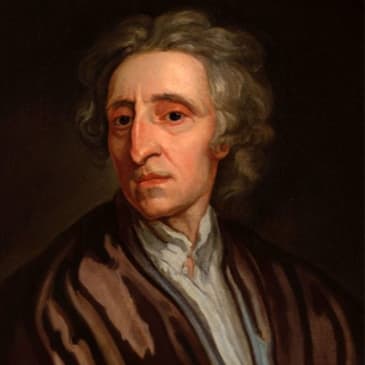
This is the FCB podcast Network. They breed us at the Tyranny the state of Things, and they bought so we work in America and of the Welcome back to the Growing Patriot podcast American History for Kids. I'm your host, Amelia Hamilton. We recently wrapped up our whole timeline of the founding period, from the very first people who came to Jamestown all the way through the American Revolution, the inauguration of George Washington, our founding documents, and seeing us on our way as our own American country. But in all of that, we didn't spend a lot of time talking about the founders themselves. So we're going to go back and spend a little bit of time with each of them a few weeks about who they really were and talk about their lives. But before we get into our very first founding father, which is going to be Benjamin Franklin, I wanted to take one episode to talk about something called the Enlightenment because so many of our founders were influenced by it. The Enlightenment thinkers were people like Rousseau, Adam Smith, Isaac Newton, and a man named John Locke. So today to tell us all about the Enlightenment. We're going to hear from one of my friends at the John Locke Foundation. My name is Donald Bryson. I'm the CEO of the John Locke Foundation here in North Carolina. And we're called the John Locke Foundation because a man named John Locke wrote the foundational constitution for the province of Carolina, which has now turned into North Carolina and South Carolina, and what he brought to our state, we were called John Locke Foundation. That's perfect, And you were the first person I thought of for today's episode, because as we get into the Founding Fathers, I bet the kids are going to hear about John Locke an awful lot and some other people like maybe someone named Russo or Adam Smith, Montesquieu, and these are all people that are part of the Enlightenment. So I wanted to just get a little bit more, you know, some foundation on what what was the Enlightenment? What does that mean? Well, that's a great question. So you know, some of these kids may have heard of the Renaissance, which was kind of a return to classical art where we saw people try to actually recreate the human form in art, and that happened in the you know, fifteen hundreds and sixty or fourteen hundred, fifteen hundred and sixteen hundreds. And then along that time, not related to art, but related to sort of philosophy and thought, came the Enlightenment, and this was a rethinking of what human rights were, that human rights existed, how do humans or how do people interrelate with their government? Why do governments exist? How do governments exist? And so you had a lot of people come along really over a fairly short span of time, say from sixteen hundred to seventeen thirty or so, you had a lot of really bright think Actually, I'll even go as late as seventeen sixty, really bright thinkers named Thomas Hobbs wrote a book named Leviathan. John Locke, who will talk about today is Jean Jacques Rousseau writing in France, who was very influenced by John Locke, And they all had these ideas about, hey, you know, government really exists for the people. The only reason that governments are allowed to govern people is because the people let them, and you know, people have given them consent. And if the people have given them consent, that means that the government owes them some things to people have other rights based in there, like the right to free speech, the right to change government. And so they really started flushing these ideas out over time, and so that's why, you know, we don't have a King of France anymore, we don't have an absolute king of England anymore. We do have a King of England, but he has to operate under a constitution, he has rules that he is to live under. And that all came out of all of the really great work that these Enlightenment thinkers did over that probably one hundred and sixty year span of time. Yeah, and that was a big difference from how people had thought before of their rulers, who were really rulers. You know, they didn't get to elect people. They didn't really think about having rights. It was more, you know, if they had anything, it's because the government owned it and gave it to them and as they saw it. So this was a really different way to think about things. It was an absolutely different way to think about things. You know that if you look back at history, basically from ancient Rome until about you know, fifteen sixteen hundred, you had the divine right of kings, which was that people believed that you know, a king was a king of a country, or a queen was a queen of a country, because God had said that you had ordained them to be the king or queen of that country, and they could rule just absolutely, and they could decide who was going to collect the taxes, and who was going to be in the army, and who was going to own land, and who was not going to own land, who could be in jail, who could not be in jail. And so this idea that all humans are created equally and they all have a say in what their government should look like, and they should all have some sort of representation in what their government should look like. Was it really turned things on its head, and that's why we have a series of revolutions or revolts. We had the American Revolution for that reason, and it changed things remarkably for the world. There's a really good book that might be a little old for our listenership, but it's called It is written by a man named Joanah Goldberg, and he calls what happened in that time period a miracle because you had capitalism where people have had the ability to determine their own financial outcomes, coming together with the idea of democracy and self government, and from there on humans flourished more than they ever ever had before. Yeah, So how did people like John Locke get this crazy idea that people have their own rights? It's a great question. So John Locke contributed a lot to political philosophy, which is what we're talking about now, and he also contributed a lot to a branch of philosophy. And this is a big word, but it's called epistemology. Have fun with that one. But the idea of epistemology is how do we know what we know? It's literally epistemology means the theory or the study of knowledge. And he had this idea that when we're all born, we are born as blank slates, and then we gather knowledge with our senses where we smell what we see, what we hear, what we taste, and then with our own reasoning, we're able to deduce some things. And one of those things that he deduced was that all humans are created equal. He also deduced that we are made, that we were made from a creator, and that creator gave everyone the same rights equally. And this is going to sound very familiar, but that we all had rights equally to life liberty, and he called it the estate or the idea that we could all pursue property. That comes out very clearly in the American Declaration of Independence when Thomas Jefferson quotes Locke almost word for word and says that we all have rights to life, liberty, and the pursuit of happiness. And so it's from those epistemics, that epistemology that Locke really like builds out his reasoning from there. But it all has to do with you know, when Locke isty, He's fifty one years old in sixteen eighty three, so he's not a young man. And then some associates of his. He didn't do this himself, but some associates of his get caught in that they were going to try to assassinate the King of England, Charles the Second. Historians now agree that Locke didn't know anything about it, wasn't involved in it or anything, but he was guilty by association. It's like when your friends do something wrong and you were just kind of around and you get in trouble too. That's what happened with John Locke. But instead of going to jail, he fled to Holland. And lived in Amsterdam for about six years. And when he lived in Amsterdam he wrote the two most famous works that he has. One is called Two Treatises on Government, where he talks about the role of government and the rights of people. And then the other thing he wrote was an essay concerning Human Understanding, where he put down his thoughts about epistemics and how we understand the world and how we get knowledge and so really, if it wasn't for this big mess it's called the Rye House plot because they met in a Rye house like Rye, like the grain. But if it wasn't for that, we wouldn't have all the great works of John Locke and him living in Holland for five years. All right, So he was in Holland and our founders were in America or not even born yet for some of them. Right, that's a long way, you know, for somebody. Certainly John Locke didn't have a TikTok or his own podcast. How did how did our founders hear about these ideas? Well? He put these into he put these into books, for one thing. And then not long before the end of John Locke's life, there was a period in England called the Glorious Revolution, which is about the third revolution that England had gone through in John locke lifetime. It was a very tumultuous place at the time, but that brought William the First to power in England and really changed converted England to what we'll call now a constitutional monarchy. It's the monarchy that we're familiar with in England where they have parliament that really controls the king more than the king controls Parliament. They were to fined rights for all of the people, all of the people are involved in government, and this idea really began to spread, and then it spread from England and went to France, and you had great writers like Voltaire who kept sort of expounding on similar ideas. Jehan Jaques Rousseau was doing the same thing. And so by the time we hit the seventeen fifties, seventeen sixties, seventeen seventies, these ideas were well thought out and understood. And remember John Locke, as i mentioned earlier, wrote the foundational Constitution for the Colony of Carolina. Of course, by this time North Carolina and South Carolina had split, but these ideas were in the Foundational Constitution of at least two of our colonies. We see that in Georgia as well, came along around seventeen thirty. I think, so this was all sort of boiling under the surface, and then just this miraculous moment in history where you have great minds like John Adams and Thomas Jefferson come together and they were able to work through these ideas and say, hey, this guy named John Locke was right. God did give us these rights. We do have rights. The kings no better of a person than we are, are, the prime ministers no better a person than we are. We're all created equally. We're being taxed without having any sort of say so, we feel like we have the right to say that, and not only that, we have the right to say that, and we have the right to change the government when it's not suiting our purposes or protecting us, which is something also John Locke talk that people have the right to change the government when it wasn't seeing after them anymore. And so we have this great document signed July fourth, seventeen seventy six that really illustrates these ideas that John Locke had put in these books, but put them into action, and we became independent from Great Britain. Gosh, I have so many other questions. When John Locke was in Holland and you mentioned King William would be William the first of England, and he was in Holland too, he was originally a Dutch king prince. Did they know each other? Is that how any of those ideas got together? Or I can't say whether they knew each other or not. I don't think that there's much indication that they that they knew each other, but I'm sure that when Locke went back that there was probably some They were probably familiar with each other. When Locke went back to England, Locke had a very rich benefactor by the name of Anthony Ashley Cooper. That's a fun name, but he was the first Earl of Shaftesbury. And I have no idea where Shaftsbury is. I'm sorry. I know somewhere England, but I don't know where it is. But Locke became really good friends with the Earl of Shaftesbury and became his personal physician. Locke eventually, I think through what I'm saying, eventually became a very successful surgeon. In addition, but it took lots of terrible practice. But he did have a medical degree. He had an undergraduate medical degree, which you can't really get anymore. That's a new thing. But the Earl of Shaftesbury had a problem with his liver and Locke did surgery on his liver and they became best friends afterwards. And so it was sort of under his protection and having the Earl Shaftsbury as a benefactor that Locke one thrived and two got to know a lot of people in nobility and possibly royalty as well. So were any of those connections of his or of Lord Shaftesbury's in the Carolinas? Is that how he got connected there? That's exactly right. So the colony of Carolina was formed, It wasn't given a governor outright to begin with. It was sort of governed by you know, you can kind of think of it as a board of directors like we have for companies. Now that they were called the lord proprietors. They were all of nobility. Well, one of those lord proprietors was the Earl of Shaftesbury, and he said, hey, we need some walls to govern this colony. What do we do? Hey, John, you wrote this down for US, and so it's a really neat thing. You go down to the state Archives here in Raleigh, North Carolina, and they have the five pages of the original document of the original Constitution of the Colony of Carolina. If you go down to Charleston, South Carolina, Charleston's at the head or at the mouth of two rivers, and one is the Ashley River and the other one is the Cooper River, after Anthony Ashley Cooper. Interesting. So, I think so much of this shows that a good idea spreads, you know, people are going to hear. I mean, I suppose bad ideas do too, but we're talking about good ideas. You know, even in a time that didn't have very fast communication, you know, people were hearing about these ideas. And I wonder if that's one of the reasons that our founders thought it was so important to specifically state that we have freedom of the press. When it got to the Bill of Rights, it definitely is and a lot of that came out. I remember, you know, Locke had to flee to Holland after the Rye House plot, like we were talking about, and a lot I had to do with he was the Duke of York at the time of the Rye House plot, but he ended up becoming James the Second of England and he began arresting a lot of people based off of he called it seditious libel, which sedition is a it's a very broad term. That's it becomes dangerous when people define it broadly. But it's the idea that, hey, you're sort of dissenting against the government, you're saying bad things about the government, and therefore you should go to jail. Well, that doesn't really work when you believe that everybody is created equally, even people who are not in government, and you believe that if the government is not acting in the interest of the people, that the people have a right to change their government. That sort of flies in the face of that. And so it's very easy to extrapolate the idea of free speech and the very important nature of free speech when you think about John Locke's philosophy, and so with the Glorious Revolution and King William the First coming in, you see a lot more political conversation. You still see the government complain about sedition, but you see much fewer arrests, and honestly, a lot of the reason that the work of the Enlightenment philosopher like Hobbes and Locke and Rousseau is because of coffee houses. Very simply people would go to coffee houses, and he was sort of a novelty item that was still coming out of the West Indies, and of course it still comes out of a lot of asl combs out of the West Indies now, But that was a place for them to have conversation. And newspapers were generally broad. They called them broadsides. There were one big sheet of paper and people would discuss the news of the day and discuss the political news and political implications. They've talked about philosophy, and they would have conversations in these coffee houses and so very quickly political ideas were spread, not like the Internet, but much quicker than it had you know, in centuries before that. Yeah, And like you talked about with the conversations, you know a lot of people couldn't read then, so they would they could get their news, you know, from from joining in those conversations and inside and outside the coffee house. And I think that was another of our key rights in the in that first Amendment, which is assembly. That's right that that that's another reason why it's important, because you know, if too many people were at this coffee house that I know the people who go to this coffee house or Republican or the people of this coffee house or Democrat, and I don't want them meeting together and plotting against the governor or the present or whatever. Then I'm just going to arrest them all because obviously they're seditious and that that's just that's very dangerous thinking in terms of what power of the government should or should not have. And John Locke would have disagreed with that notion. And I think the founder such as Thomas Jefferson and George Washington would have agreed with that is or would have disagreed with that as well. Yeah, what do you think John Locke would would think about him still being remembered today? We're still talking about him on a podcast, there's an organization named after him. Do you think he expected to leave such a legacy. I think he knew he was influential, right, I think he knew that he was kind of smarter than the average pair. I think he would be surprised that he's still sort of immortalized in the way that he is. I don't think he'd be unhappy about it, because I think he's firmly believed what he wrote down and if you read his books on his book on government, he's a little starky, like he's kind of a sassy pants about it. I think I think he would be very pleased, if not, besides of just being startled that you know, he's left a legacy not just in the United States, but you know, really around the world. This idea that we have of the modern concept that we have of democracy and democratic republics that we have here in the United States. I mean, you're not going to have those if you don't have John Locke. Yeah, what can all of us be doing to help that that legacy endure? Well, that's a really fun question. One. It's conversations like these that I think are really important and continuing to talk about that. And you know, these these fellows haven't been around for a few hundred years, but the ideas are very important. You know, ideas ideas themselves are important to have a life of their own, and this one, you know, this idea of the social contract, uh in free speech and you know, consent of the governm That they're important ideas, and I think that we should continue to discuss and the same way that people have those conversations about what John Locke wrote down, we should continue to have those discussions because you know the great thing about the American experiment is that we're not a finished product. We're always trying to be better at what we're doing. We're always trying to make a better government to serve the people better. And so you know, that's what we do with the John Locke Foundation as we talk about state government and federal government stuff here. But I think that the more that people know about these ideas and apply them and how they vote and now they think and when they run business, and I think, the better our society will be. And so starting these conversations when you're at a younger age, I know that I did. I know. I had these conversations when I was you know, ten twelve. It's been very beneficial for me. Yep, me too. My dad was very into history and we went to Colonial Williamsburg a million times and things like that, and I definitely trace my history NERD credentials to childhood. Yeah, no, that's awesome. And Williamsburg is a great place people should visit. If people are ever in North Carolina, you can go to Winston Salem, North Carolina, and they have Old Salem, which is very similar to Colonial Williamsburg, shows how people were living in the seventeen and early eighteen hundreds there. But we've got a rich colonial history. And people who say, oh, that was in the past and it doesn't matter anymore, Well, that's just a really lazy way of viewing our country. Some good things happen in our history and some bad things happen in our history, and I think we're given a responsibility to kind of parse that out, read about it, find out what's good, what's bad. The good stuff, keep doing it, the bad stuff throw it away. Absolutely well, Donald, we really appreciate you joining us today to tell us about one of the good ones. Well, thank you so much. I'm always happy to be on. And John Locke's an interesting guy, but I don't know if i'd let him do surgery on me. Something to think about. I loved hearing about John Locke, and his story tells us about the Enlightenment itself too. The word enlightenment means having knowledge or understanding. It's kind of like when you turn the light on and now you can see or in a cartoon, when the light bulb comes on over someone's head when they have an idea, it's something new, something to see, something to understand. And that's what the Enlightenment did. It helped people understand about their own rights, human rights and individual rights, and that really changed their ideas about how the government should treat them. And we heard about how those ideas came through in America's founding and you're going to hear a lot more about those ideas as we talk about America's founding fathers in the episodes ahead. So I hope you enjoyed this episode. I can't wait to share the stories of the founding Fathers with you. Thank you so much for listening, and remember you can find out more about this episode and every episode at Growing Paytriots dot com or on Instagram, Twitter, and Facebook at Growing Patriots Can't wait to see you next time. They breed us alve for Jeeranny the start of the thing, and they thought so well were Americaanda. This has been a presentation of the FCB podcast network where Real Talk lives. Visit us online at Fcbpodcasts dot com.